


Tested and certified, our products are genuine and meet international standards and requirements. Our wide range of material-handling equipment and hardware riggings include chain block , lever block , electric hoist , plain/geared trolley , G80 chains , webbing sling , ratchet tie down , steel wire rope , shackles, turnbuckles, wire rope clips , among others.
Prefessional QC team with 20 Years' experience. Tested and certified, our products are genuine and meet international standards and requirements.
Our wide range of material-handling equipment and hardware riggings include chain block , lever block , electric hoist , plain/geared trolley , G80 chains , webbing sling , ratchet tie down , steel wire rope , shackles, turnbuckles, wire rope clips , among others.
Grade 80 & Grade 100 Materials used for all lifting equipment & riggings. With a wide range of premium products, hardware riggings and material handing equipment, Our top priority is to deliver high quality products while ensuring complete customer satisfaction.




-
G414 Thimble

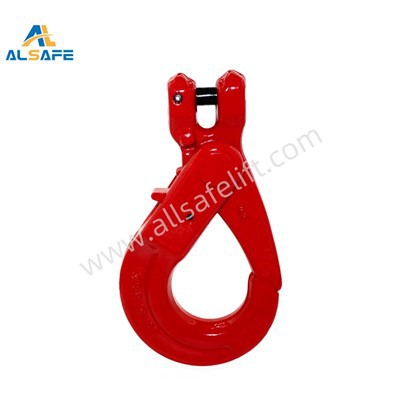
A clevis hook refers to a hook with a U-shaped attachment point or coupling with holes to thread a pin through and assemble your rigging—Many people like the removable pin to assemble and disassemble rigging quickly & easily. Clevis hooks are used for non-overhead applications.
Clevis grab hooks are designed with a special narrow throat used to "grab" and shorten or hold a length of chain used in tie-down applications and in load-rated lifting slings. The throat engages the chain between the links for quick non-slip handling. Clevis grab hooks are manufactured to be used with a specific size and grade of chain. There are two types of clevis grab hooks, so the end-user should understand what type of clevis grab hook they're using prior to lifting a load into the air:
Becoming less common, the "non-cradle" clevis grab hook is most often seen in tie-down applications. When using a standard style clevis grab hook, it is important to be aware of any reductions in working load limit (WLL) that the hook manufacturer may require based on usage configuration. When using a "standard" clevis grab hook, most manufacturers require a reduction of 20% of the WLL.
The "cradle style" is replacing the "non-cradle" or "standard" clevis grab hook for most applications due to its improved support of the engaged chain link. This additional support of the engaged link often means there is no reduction of working load limit (WLL) when used as designed. Always follow manufacturer recommendations for all lifting products.


Step 1:
Step 2:

There are two main types of wire rope clips—u-bolt and double saddle clips. U-bolt wire rope clips are the most common and may be made of forged or malleable metal.
U-bolt wire rope clips
This type of wire rope clip is essentially a u-bolt, two nuts, and a metal base (saddle) that can be made from forged steel or cast iron. Careful consideration and attention must be given to the way u-bolt type wire rope clips are installed.
The base of the wire rope clip is made from forged steel. Forged clips are heated and hammered into the desired shape—resulting in a consistent grain structure in the steel. Forged wire rope clips are used for critical, heavy-duty, overhead loads such as winch lines, crane hoist lines, support lines, guy lines, towing lines, tie downs, scaffolds, etc.

A shackle is a u-shaped, load-bearing connecting device designed to be used with a removable pin. Shackles can be used in a number of different rigging and load securement applications to connect different types of lifting slings, chain, or rope to an object or to each other.


There are two main types of shackles: bolt-type shackles and screw-pin shackles.
Bolt-type shackles have a U-shaped body with a bolt through the center. The bolt is secured with a nut. Bolt-type shackles are the most common type of shackle. They are easy to use and available in a wide variety of sizes and strengths.
Screw-pin shackles have a U-shaped body with a screw pin that passes through the body and a hole in the pin. The screw pin is secured with a washer and a nut. Screw-pin shackles are more secure than bolt-type shackles but are also more challenging to use.